

Embarking on the transition of moving a production mold to a new supplier is a daunting task. This process requires critical decisions and precise coordination.
Businesses often face problems such as limited capacity, technical issues, poor quality, or a supplier closing. In such situations, they often need to make difficult decisions to change to improve. But how do you transfer a production mold? This guide provides an approach to moving your production molds.
Find a Supplier with a Collaborative Approach
At Core Molding Technologies, we understand the intricacies involved in transferring a mold. We believe in a partnership, where open communication and detailed planning of the transition are at the forefront.
We encourage our potential partners to engage with us early in the process. This collaboration allows us to align our capabilities with your needs, with minimal downtime to continue production. We will form mold transfer management teams to understand the schedule and production functions from order entry to shipment.
Understanding Mold Quality
The first step in this journey is to establish production requirements between your mold and the prospective supplier’s equipment. At Core Molding Technologies, we seek to understand every detail:
- Visual Evaluation: A clear set of photos of your mold gives us the first insight into its condition. Are drawings or CAD files available for review? An untrimmed last-off part will provide insight into mold condition.
- Heating Mechanism: If you’re working with a compression molding SMC mold, it’s crucial to disclose the heating method—steam, oil, or electric. Each of these heating methods interacts differently with our equipment. Knowing this upfront allows us to prepare for a seamless integration.
- Nozzles: If you’re working with a low-pressure injection molding (LPI) mold, it is critical to discuss if nozzles are included. Or will new assemblies be required?
- Mold Cavitation: Is your mold designed for single or multiple productions in one go? This information helps in assessing cycle times and production scheduling.
- Production History: Understanding the production history of a mold helps determine its lifecycle and maintenance needs. You can also share process parameters to confirm cycle time.
Identifying Key Information Holders
The best place to start gathering information is with your team. Your internal experts are the custodians of this knowledge. Workers with job titles like Tooling Engineers, Quality Engineers, Process Engineers, Program Managers, and Buyers can access this information. Before moving a production mold, detailed histories and technical specifications are instrumental in evaluating a mold’s readiness for transfer.
Understanding Quality Expectations
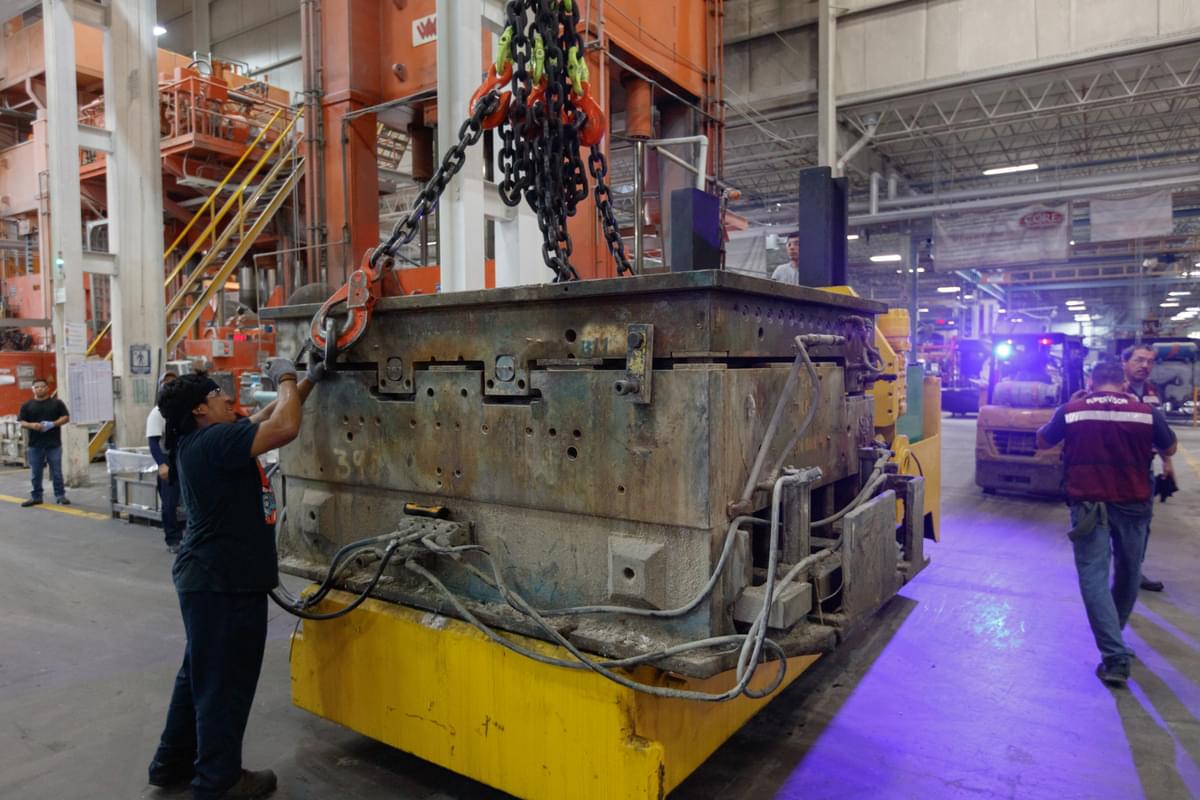
With our expertise in engineered materials and manufactured solutions, we can accept transferred tools for compression and injection molding.
We are ready to accept your molds and make sure your production runs smoothly and meets your quality and efficiency needs.
- Production Part Print: A print with tolerances helps us understand how the part may connect with other assemblies.
- Gauge/Fixture Print: If the transfer includes gauges or fixtures, do you have drawings or CAD files available? When was the last GR&R completed? Do the gauges match the current drawing revision levels?
- Master sample: A known good part or Master Sample will help to visualize surface appearance requirements and trimming expectations.
- Quality documentation: Control plan, work instructions, and gauging instructions will aid in reducing the
Schedule the Transfer
Both parties should mutually agree upon a tool transfer timeline. At Core Molding Technologies, we seek to understand every detail when moving a production mold.
- Calculating Safety Stock: The current molder should build a safety stock to allow for equipment transfer and validation.
- Validation: This process can take several weeks depending on the number of tools transferred, secondary equipment transferred, and complexity. Additional steps to the process can include sampling, metrology, possible mold refurbishment, and resampling. Each of these steps requires documentation and record-keeping. Consider this time in the schedule.
Assuring a Quality Future
In Sourcing, Procurement, and Purchasing, you need a supplier who meets your standards and helps your supply chain. At Core Molding Technologies, we are committed to being that partner, providing innovative solutions and reliable results. Transitioning to a new molding partner is a significant move, and we are here to support you every step of the way. Be sure to review our quality certifications.